
Program Overview
Program Structure

Sandbox is structured into three cohorts per year: fall, spring, and summer.
As a new Sandbox student/team who meets the eligibility requirements:
You can apply for the fall or spring cohort. The summer cohort is for continuing teams who have already started a project in the Sandbox .
You can apply as a one person team if you have not yet identified team members.
As a continuing Sandbox student/team:
You can apply to extend your existing funding for a subsequent cohort, if you have remaining unused funds.
You can apply for additional funding, whether you have unused funds or not.
You apply by filling out a self-assessment survey that outlines your progress and your plans, including your funding request.
Most teams remain in the Sandbox program for 2-3 cohorts, on average 12-18 months. Whether you extend or re-apply, you must continue to meet the eligibility requirements and fulfill the requirements of each cohort in which you participate.
During summer only, teams can allocate a stipend of minimum of $2K and up to $5K per MIT student on the team who is working full-time on the project, with a maximum of $10K per team.
A team may address one initiative/idea per application.
A team may submit more than one application, particularly at the exploratory level.
Funding, Equity and IP
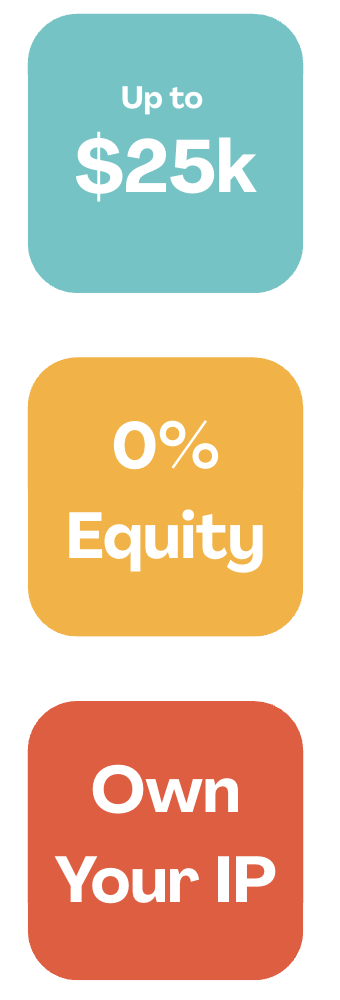
Sandbox provides up to $25K in cumulative funding.
Sandbox awards up to $25K per idea. The application you qualify for (over or under $5K) is determined on a cumulative basis, for example:
If in cohort 1 you received $2K and are now applying for $4K, you are in the over $5K application.
If in cohort 1 you received $3K and are applying for $2K or less, you fall in the under $5K application.
The funding that you are awarded is distributed through reimbursements.
As part of the application process, current and prospective Sandbox teams prepare and submit a budget outlining planned expenses that support key project goals.
The Sandbox purchasing guidelines provide details on permitted and prohibited use of funds and should be used in preparing the budget.
Teams submit receipts for reimbursement, which typically takes 2 weeks to process.
MIT Sandbox funding is non-dilutive: the program does not take equity in student companies.
Students and teams do not give up any rights to intellectual property (IP) through participation in the program.
Students apply for funding – there is no need for a Principle Investigator
Graduate students are expected to discuss their projects and engagements with their research advisor. If commercializing research, graduate students will be asked to get approval from the TLO, which includes a signature from the PI.
Sandbox provides legal expert advice to address any questions or issues related to IP
“Through mentorship and connection with the entrepreneurial community, Sandbox has given me the tools to succeed and the belief that success is achievable.”
Program Requirements
Once you become part of a Sandbox Cohort, you are required to:
Attend a kick-off session
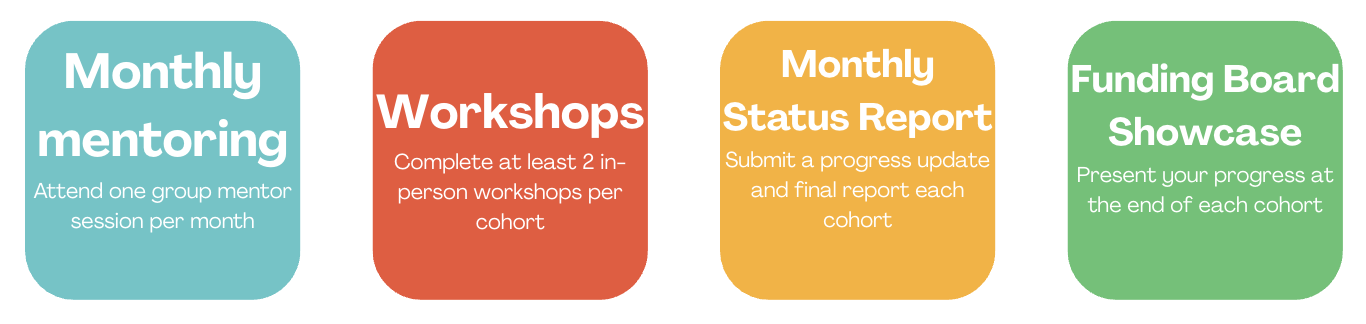
Actively participate in a mentoring session once a month (attendance and participation at all mentoring sessions is mandatory)
Attend MIT Sandbox hosted workshops or an equivalent class - view a list of acceptable classes
MIT Sandbox hosted workshops are required to have good standing participation in the program. The minimum attendance is to complete 2 in person workshops during the cohort. This does not include the Kick-Off session, Lean Launch Pad or Reimbursement workshops. Attendance will be taken at the event.
Submit a monthly status report and final report (template is provided)
Attend a Funding Board Showcase at the end of your cohort
Maximize the opportunity by taking advantage of the multitude of resources that we provide
Eligibility
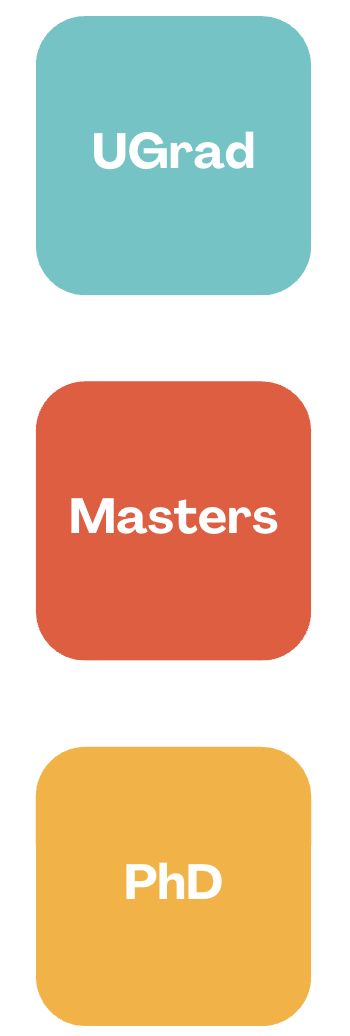
Open to all degree-seeking MIT graduate and undergraduate students from any MIT department applying as individuals or as part of a team.
Special students, exchange students, and postdocs are not eligible to apply but are welcome to join a student-led team.
All students participating in the program have to be in good academic standing.
For the summer cohort, students who graduate in June are considered current students.
A team must have at least one full-time MIT student in a leadership role.
The MIT student should be directly involved in the development of the project and not in a cursory role.
A team can include non-students and non-MIT members.
A team should have a startup idea that they are actively working on or they want to begin working on.
All business models are welcome, including non-profit and commercialization of MIT research (the latter requires approval from the TLO).
The Sandbox cannot support projects that are internships, charities, or research that a team is not actively trying to commercialize.
A team’s total equity-based funding cannot exceed $50K.
Teams must disclose all other sources of funding, from both investors and non-dilutive sources.
You are still eligible for Sandbox as long as your prior or concurrent equity-based funding totals under $50K.
MIT Sandbox for Executive MBA (EMBA) students:
EMBA students are not eligible for Sandbox, but are encouraged to apply to VMS for mentoring support.
“The journey with Sandbox has been nothing short of transformative, providing us with both the moral and financial support essential for creating our venture. Without their backing, our progress would have been markedly slower.”
Sandbox Award Rubric
Whether you are exploring a new idea or are ready to seek outside investor funding, the MIT Funding Board will assess your business proposals based on these criteria:
Project has educational potential for students: $1K-$25K
Students have identified a clearly defined problem: $1K-$25K
Team has a plan for customer discovery, product design, and technology validation: $5K-$25K
Team has completed preliminary market research and has proposals for a viable business model: $10K-$25K
“Sandbox gives you capital to explore your idea, and access to mentors and entrepreneurs who have done it before. If you have the energy to chase what you believe in, you can do it here.”
Giving Back
Funding for MIT Sandbox (and other programs) is possible because of the deep commitment of alumni and friends to MIT’s mission. MIT Sandbox does not take equity in student companies.
There is an expectation, but no requirement, that participating students will make a pledge of cash or equity back to the MIT Sandbox Program and/or the organizations that have supported them, if their venture is successful.
If students elect to make a pledge, it will come due only when their venture becomes a legal entity and raises its first round of equity funding from sources outside of Sandbox.
Students who receive +$5K in funding will be asked to sign a pledge to give back to the MIT Sandbox Innovation Fund or MIT.
This pledge to give back is a personal choice and not binding.
Funding will not be conditional on a student signing a pledge.